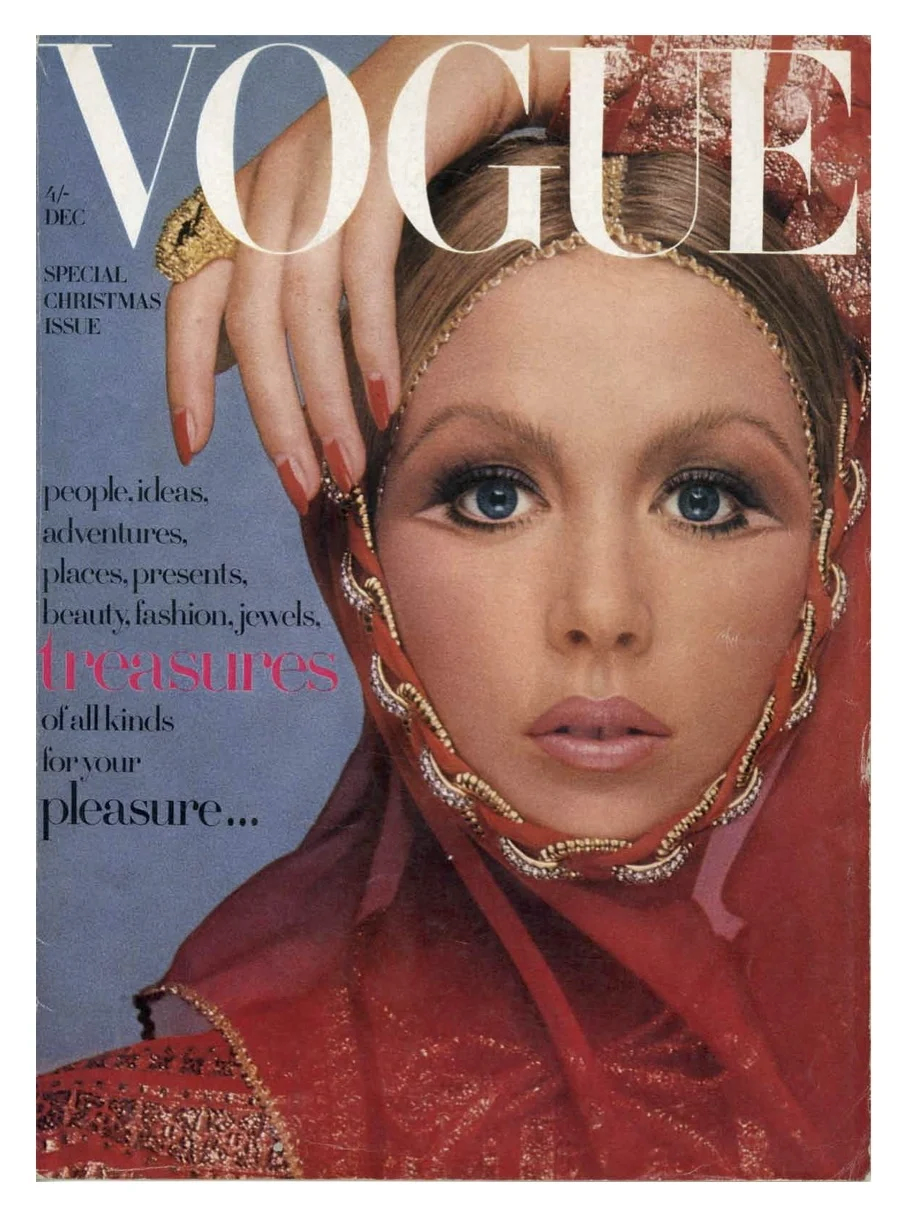
The World Comes to Kabul
By the late 1960s, Kabul was a vital stop on the "Hippie Trail," attracting artists, musicians, and travelers. Recognizing this cultural shift, Vogue magazine dispatched a team to capture the magic of the Afghan landscape.
Featuring an extensive multi-page spread, the "Treasures" issue served as a formal introduction of Afghan aesthetics to the heights of Western high fashion, permanently linking the country to the bohemian luxury of the era.
Documenting the Adventure
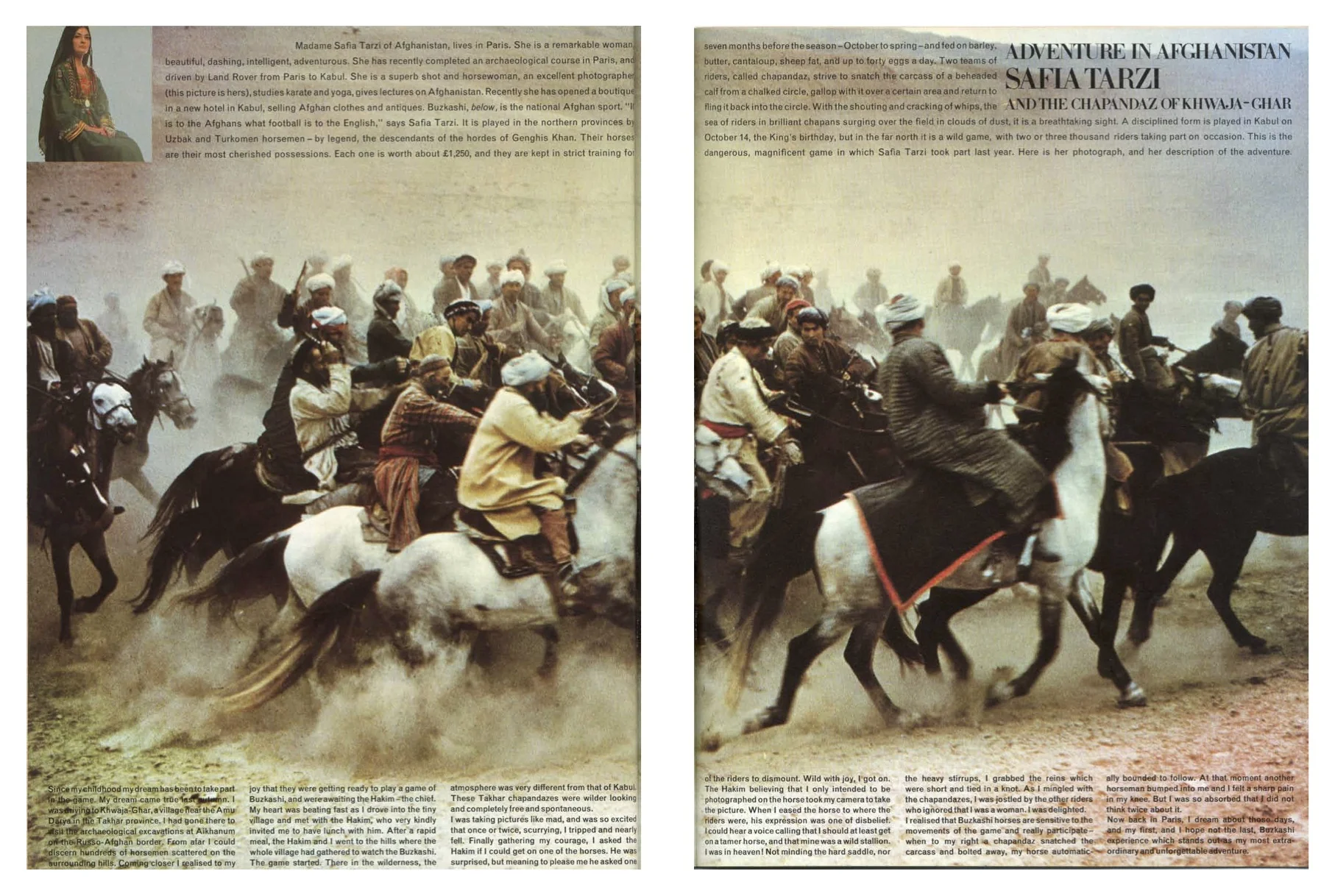
The resulting editorial was as much a travelogue as it was a fashion statement. The magazine profiled Safia Tarzi directly, praising her as a "remarkable woman" who drove her Land Rover from Paris to Kabul.
Beyond providing the garments, Tarzi's own photography of Buzkashi—a fierce, traditional horseback game—was featured in the spread, giving Western readers a raw, authentic glimpse into the culture she drew her inspiration from.
Fashion as Function
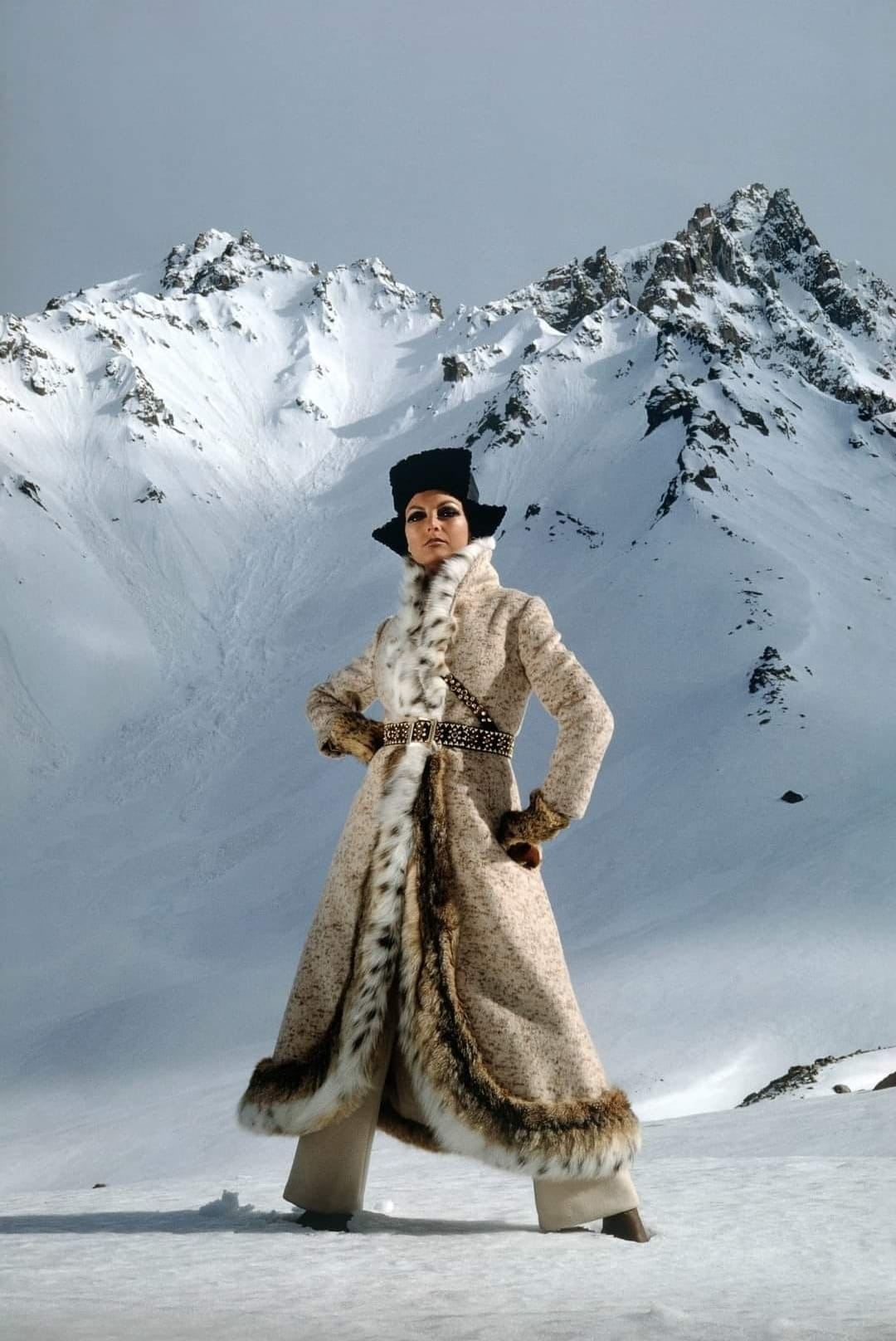
This stark, icy imagery highlighted the very origins of Tarzi's inspiration. The traditional postin (shearling coat) was never meant to be a delicate runway piece; it was engineered to survive the brutal winters of the Hindu Kush mountains.
Seeing a model enveloped in these heavy, functional layers amidst the deep snow proved that true Afghan craftsmanship was the perfect marriage of necessary survival and breathtaking artistry.
Monumental Juxtapositions
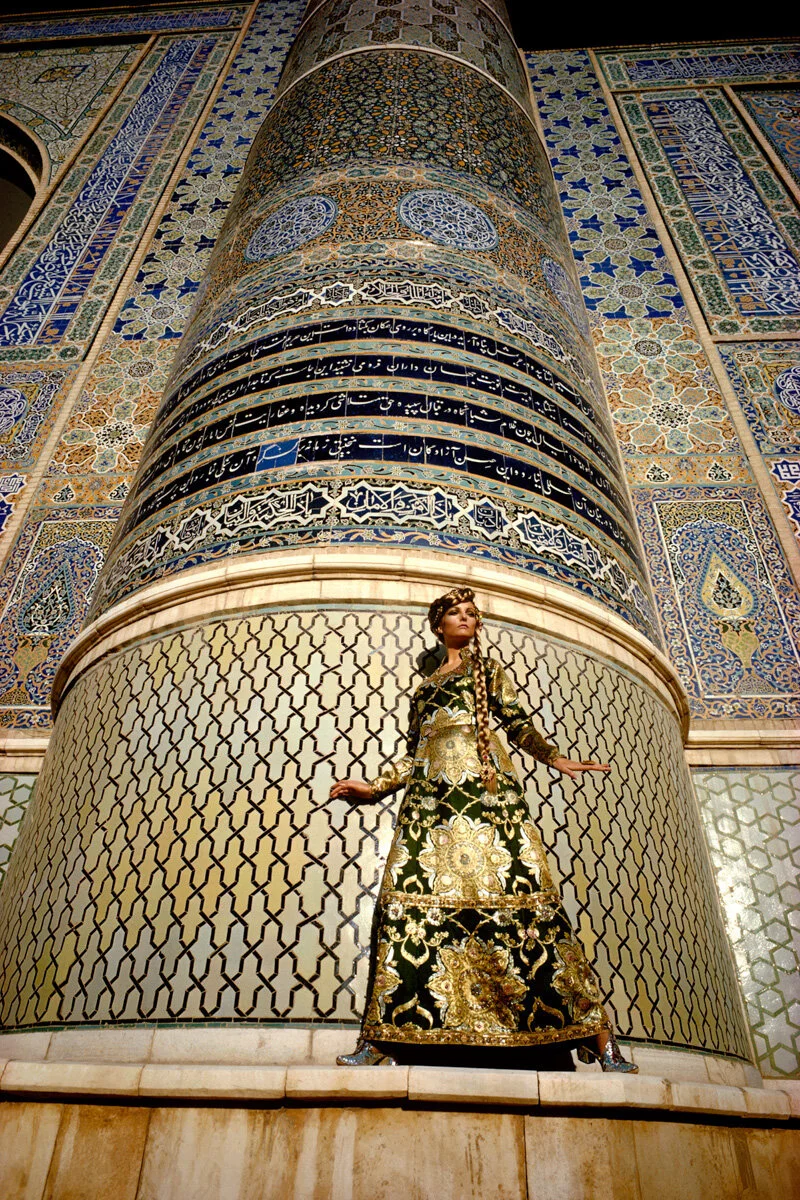
Photographer Fred Maroon was brilliant at finding harmony between the clothing and the environment. By placing delicate haute couture against the awe-inspiring scale of ancient, tiled architecture, the photography elevated the garments.
The heavy gold floral embroidery of the dress directly mirrors the complex, centuries-old artistry of the pillar behind it, grounding the fashion firmly in Afghan history.
Sparking a Global Trend
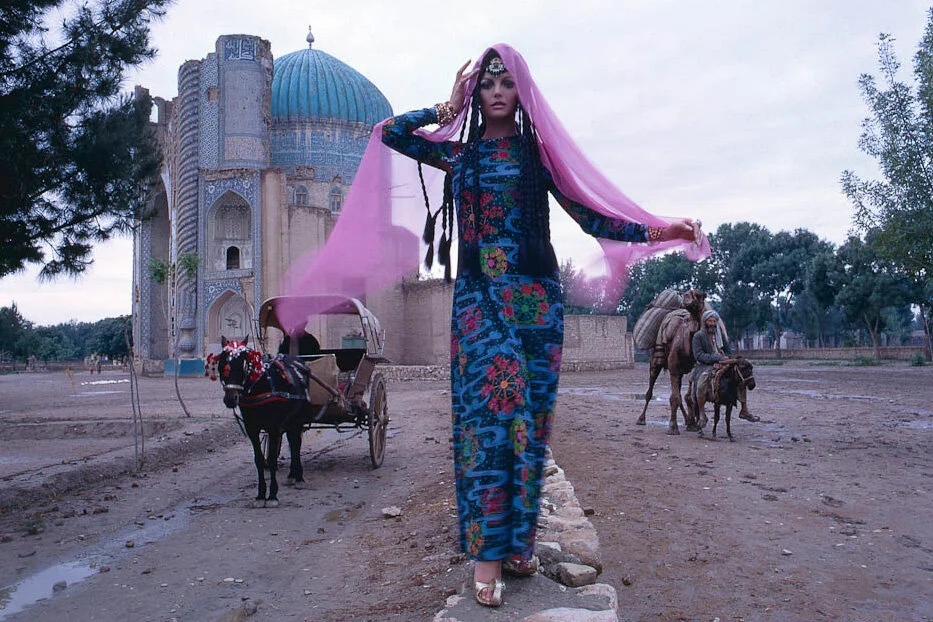
Contrasting the harsh snowscapes were images of vibrant, blooming color. A model draped in rich blue patterns and a sweeping pink veil, casually strolling past a traditional horse carriage, perfectly encapsulated the "Afghan Adventure."
When these romantic, bohemian images hit Western newsstands, they caused a sensation. The editorial catalyzed a massive global demand for "Afghan Chic," ensuring the aesthetic influence of designers like Tarzi would echo through decades of fashion history.